Var Grundtvig racist? Velkommen i den grønne lund:
Vi føre løver i vort skjold
af hjerter tæt omsatte,
dem førte vi fra hedenold
og ingen abekatte.
Var Grundtvig racist? Velkommen i den grønne lund:
Vi føre løver i vort skjold
af hjerter tæt omsatte,
dem førte vi fra hedenold
og ingen abekatte.
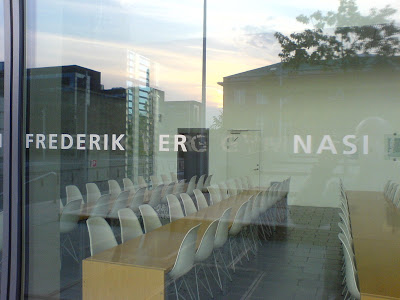
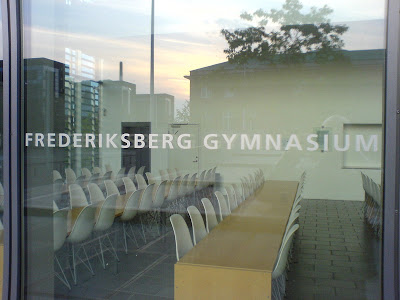
Og så på det ellers så konservative Frederiksberg!
Det her er vanvittigt:
Hattip: Chase Me Ladies. Og tak til Pelle for et link til en god blog.
Minder mig i øvrigt om Thomas Breitenbachs kommentar til Danmarks Radios anbefalinger: Sådan undgår du at blive overfaldet. Måske skulle politiet overveje at lave sådan en video? Jeg er sikker på, at de der aerobics-tøser kan købes billigt, for så gode er de altså heller ikke.
Lige nu diskuterer det amerikanske senat regulering af internettet med den såkaldte Net Neutrality act (som jeg rent ud sagt ikke aner, hvad går ud på). Men hør her hvilke vise ord, Senator Stevens (R-Alaska) har at sige om internettet. En udskrift af den gode senators viden om det internet, han skal regulere (oprindelig speak her): (Bemærk: Bonus i bunden!)
There’s one company now you can sign up and you can get a movie delivered to your house daily by delivery service. Okay. And currently it comes to your house, it gets put in the mail box when you get home and you change your order but you pay for that, right.
But this service isn’t going to go through the internet and what you do is you just go to a place on the internet and you order your movie and guess what you can order ten of them delivered to you and the delivery charge is free.
Ten of them streaming across that internet and what happens to your own personal internet? I just the other day got, an internet was sent by my staff at 10 o’clock in the morning on Friday and I just got it yesterday. Why? Because it got tangled up with all these things going on the internet commercially.
So you want to talk about the consumer? Let’s talk about you and me. We use this internet to communicate and we aren’t using it for commercial purposes.
We aren’t earning anything by going on that internet. Now I’m not saying you have to or you want to discrimnate against those people […]
The regulatory approach is wrong. Your approach is regulatory in the sense that it says “No one can charge anyone for massively invading this world of the internet”. No, I’m not finished. I want people to understand my position, I’m not going to take a lot of time. [?]
They want to deliver vast amounts of information over the internet. And again, the internet is not something you just dump something on. It’s not a truck. It’s a series of tubes.
And if you don’t understand those tubes can be filled and if they are filled, when you put your message in, it gets in line and its going to be delayed by anyone that puts into that tube enormous amounts of material, enormous amounts of material.
Now we have a separate Department of Defense internet now, did you know that? Do you know why? Because they have to have theirs delivered immediately. They can’t afford getting delayed by other people.
[…]
Now I think these people are arguing whether they should be able to dump all that stuff on the internet ought to consider if they should develop a system themselves.
Maybe there is a place for a commercial net but it’s not using what consumers use every day. It’s not using the messaging service that is essential to small businesses, to our operation of families.
The whole concept is that we should not go into this until someone shows that there is something that has been done that really is a viloation of net neutraility that hits you and me.
Der forekom muligvis uforståeligheder, vi beklager. Men husk: de regulerer jo til fællesskabets bedste! Se også Jon Stewarts satiriske behandling af hvad der er så uhyggeligt, at det kun kan være sandt.
Et sjovt lille billede fra Ghana, som jeg har haft liggende i et stykke tid. Bare de ikke får en retssag på nakken!

Kattene fra Brasilien? Nej, Hitler-katte!

Update, 7. september 2006:
Ny hjemmeside: www.catsthatlooklikehitler.com
På den altid læseværdige blog Walla Min Fætter har Bielefeldt et langt og meget morsomt indlæg om det globaliserede VM og dets baggrund i det engelske imperiums ‘soft power’ – sport. Et lille uddrag:
På Englands hold var der en del sorte biprodukter af imperiet – Cole, Ferdinand og Lennon. Sorte englændere spiller fodbold, men indiske englændere gør ikke, som filmen Bedre end Beckham afslørede. Da imperiet var allerstørst, måtte englænderne helt til Afrika for at finde arbejdskraft; i dag kommer arbejdskraften af sig selv. Der er tale om en slags fodboldslavehandel på frivillig basis. Fodboldens udvikling er også markedets sejr over staten, selv om spillerne kæmper for statsskabte nationer. Man savner dog firmalogoer på landsholdstrøjerne, som vi kender det fra klubfodbold – undtagen den markedsfjendske klub FC Barcelona.
Og i det hele taget er dette VM fyldt med små og store imperialistiske og globalistiske pudsigheder. Kun ganske få af turneringens 32 hold har aldrig været en europæisk koloni. Tysklands hold består blandt andet af to polakker – Lucas Podolski og Miroslav Klose – som begge er født inden for grænserne af det tidligere Preussen. I Tysklands gruppe finder vi også Ecuador, som hovedsageligt består af efterkommere af afrikanske slaver, der i 1600-tallet blev fragtet til Sydamerika af de spanske koloniherrer. Også Costa Rica er en forhenværende spansk koloni, hvorfor der tales spansk på taktikmødet i omklædningsrummet.
Den ghanesiske spiller John Pantsil hylder sine israelske fans ved at tage et israelsk flag frem efter et mål mod Tjekkiet. Den arabiske verden er rystet. Heldigvis sagde ghaneseren undskyld, da han forstod, hvilken forfærdelig gerning han havde gjort. Uha, uha. Der skal ikke meget til for tiden.
En lille sjov historie, der handler lidt om Ecuadors fodboldhold og lidt om den menneskelige psyke – og en lille smule om velfærdsstaten. Tak til Abekongen.
Lost in the middle of nowhere, a master and his servant were looking for assistance when they came across a small shack. In front of the hut was a single cow. The master knocked on the door and a man opened it.
“What can I do for you?,” the owner asked, with a smile on his lips.
“We’ve had some transport problems and wondered if you could give us shelter for the night?”
“Of course,” came the reply. “Come in and make yourselves at home.”His wife invited the guests to sit down to dinner, which consisted of milk, cheese and beef. The servant, surprised by the surroundings, then said to the hosts: “All I’ve seen is a cow in front of your house. How do you live like this?”
“It’s like this,” answered the man. “The cow gives us milk, and her calves give us the hides we need to make clothes and the meat we need to eat. What else do we need?”
After dinner, everyone went to their rooms. The next morning, the guests thanked their hosts and left. After they departed, the master turned to his servant and ordered him to return and kill their cow.
In spite of his astonishment, the servant carried out the order. The event weighed on his conscience for years, until he finally decided to return to the place to find out what had happened to the family. Imagine his surprise when he arrived at an enormous estate, full of animals, containing a mill and various other outhouses.
Amazed, he knocked on the door, which was opened by a man he didn’t recognise.
“What can I do for you?” he asked.
“I was here many years ago, but everything was very different. I was wondering what happened to the family who used to live here,” said the servant.
“That must be us, we’ve never moved.”
“But how have you come by all of this wealth?”
“Well actually, something very strange happened. One morning we woke up and our cow was dead. We had no choice but to embark on a new life full of hard work and new challenges, which has led us to where we are today.”
